

📑 Table of Contents
- A One-Button Game That Still Finds New Ways to Kill You
- Tap, Hold, Survive
- Geometry Dash Unblocked Isn’t Just a Cube Anymore
- Why One Mistake Undoes Everything
- Built by One Person, Still Growing
- Where It Fits in a School Day
- Five Beats to Get the Timing Right
- Two More Rhythm Tests Worth Trying
- The Spike Always Gets the Last Laugh
A One-Button Game That Still Finds New Ways to Kill You
Written by Riley Chen
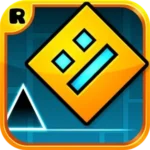
One button. That’s the entire control scheme in Geometry Dash, and somehow that one button has ended more free periods in frustration than almost anything else on this site. You tap, you jump or fly or flip, and a spike somewhere down the line is waiting to prove you tapped wrong.
Tap, Hold, Survive
- Spacebar, up arrow, or mouse click: jump, fly, or flip, depending on the current mode
- Touch: tap and hold anywhere on the screen, same logic as the keyboard version
- Holding the input: keeps you rising in flight modes, releasing brings you back down
There’s nothing to memorize beyond that one action. What changes is how your icon responds to it, which is the whole trick of this game.
Geometry Dash Unblocked Isn’t Just a Cube Anymore
Geometry Dash started as a cube that jumps over spikes, and it’s stayed true to that in its most basic mode. But RobTop kept adding modes over the years, and Geometry Dash unblocked versions you’ll find in browsers typically carry several of them. The ship flies on a hold-to-rise, release-to-fall pattern. The ball flips gravity with every tap instead of jumping. The wave mode locks you into a rigid 45-degree diagonal line that only changes direction when you hold or release.
Each level mixes these modes together, sometimes switching three or four times in a single run, and the music is synced to the obstacles closely enough that experienced players start reading the beat instead of the shapes.
Why One Mistake Undoes Everything
Here’s the part that makes people throw their mouse. Most levels send you back to the start the instant you hit anything, no matter how far you’d gotten. There’s a Practice Mode that places checkpoints so you can learn a section without restarting from zero, but normal play mode has none of that mercy.
I spent what felt like forty attempts on one level’s wave section before I cleared it, and I’m fairly sure the ninth attempt was actually better than the one that worked.
A tangent worth mentioning: the official game now has over 40 million user-made levels on top of RobTop’s original 26, and difficulty ratings on those range from easy enough for a first try to levels that take elite players months to complete. Browser copies usually stick to a curated set rather than the full catalog, so don’t expect every custom level to show up.
Built by One Person, Still Growing
RobTop Games, run by Swedish developer Robert Topala, released Geometry Dash on iOS and Android in August 2013, with the Steam version following in December 2014. It was originally called “Geometry Jump” before the name changed. Topala has kept adding modes and features to the official release for over a decade, including a major platformer-style update that broke away from the pure auto-scroll format.
Where It Fits in a School Day
Short levels make Geometry Dash forgiving in small doses, even with the instant-restart punishment, since a fresh attempt costs you seconds rather than minutes. It’s one of the most recognizable unblocked games out there, and Play Geometry Dash at school works best in those awkward five-minute windows between classes, where a longer game would just get interrupted halfway through.
It only needs one input, so Geometry Dash unblocked Chromebook sessions run fine on a trackpad click or the spacebar, whichever your copy responds to better.
Five Beats to Get the Timing Right
Beat 1: Learn the mode, not the level. Each mode has its own rhythm. Master how the ship floats or the ball flips before worrying about a specific layout.
Beat 2: Use Practice Mode first. If your copy has it, place checkpoints before you ever attempt a full run. There’s no shame in learning the hard sections first.
Beat 3: Let the music guide your taps. Levels are built around their soundtrack. Once you stop watching only the spikes and start feeling the beat, timing gets easier.
Beat 4: Short taps beat long holds in cube mode. Holding too long sends you higher than you need, right into the next obstacle.
Beat 5: Expect to fail the same spot a lot. That’s not you being bad at the game. That’s the game being built to need repetition.
Two More Rhythm Tests Worth Trying
Geometry Dash Wave: strips the game down to just the wave mode, so it’s pure diagonal-line tension with none of the mode-switching.
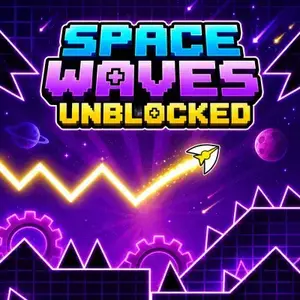
Space Waves: runs on the same hold-to-rise, release-to-fall idea, except the obstacles are tunnels instead of spikes.
Find both on unblockedgamesfree.com once a single cube isn’t giving you enough to dodge.
The Spike Always Gets the Last Laugh
You’ll clear a level eventually, right after you were ready to give up on it completely. Tap again.